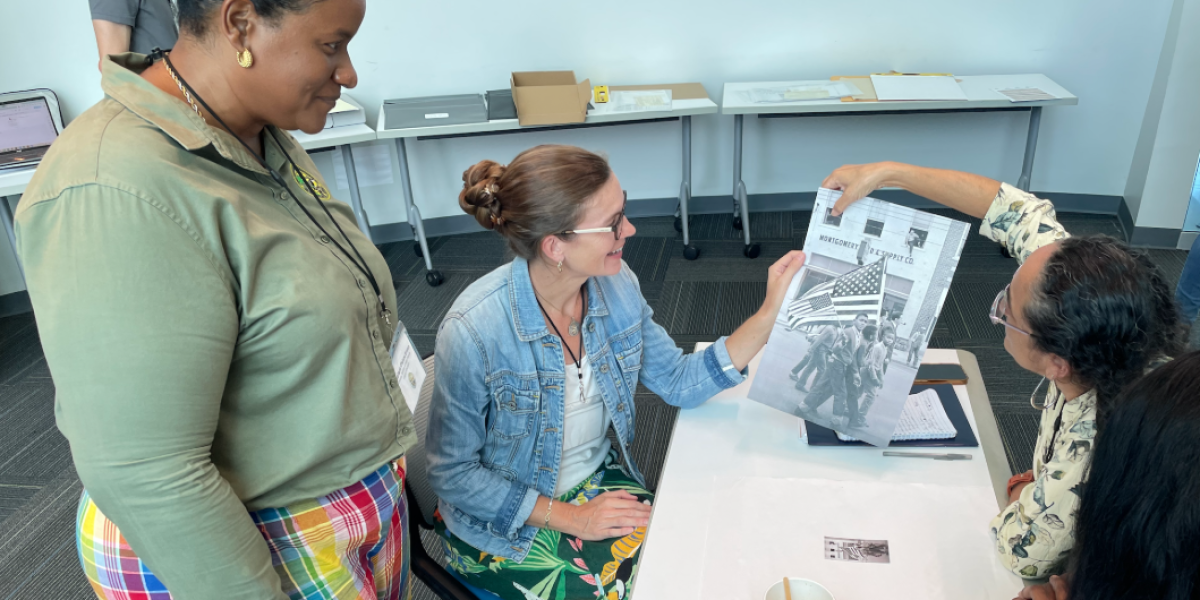
ST THOMAS SOURCE.com – Educators from across the U.S. Virgin Islands gathered on St. Croix earlier this month for a dynamic professional development workshop aimed at transforming the way history is taught in the classroom by making it more personal.
Hosted by American Ancestors, the workshop “Genealogy in the Classroom: Bringing History to Life with Family History” took place on April 18 at the University of the Virgin Islands Research and Technology Park. The program highlighted genealogy as a powerful tool for connecting students to history, culture, and geography through their own lived experiences and family stories.
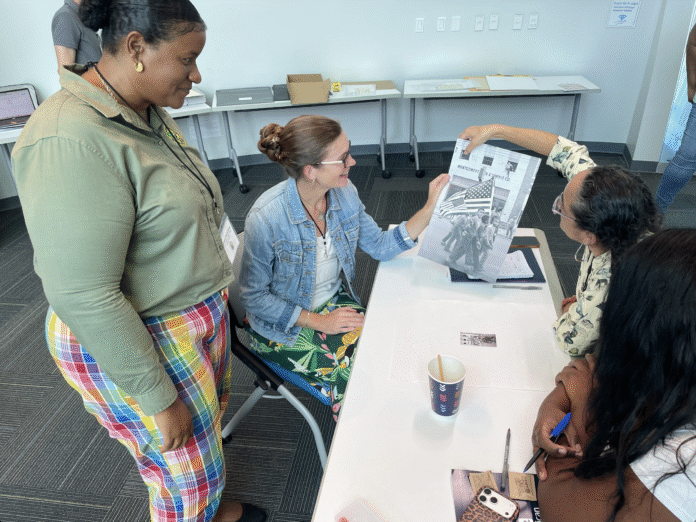
(Photo by Sophia Aubin, Caribbean Genealogy Library)
By all accounts, the workshop was a strong success. A total of 26 educators participated, including 20 from St. Croix and six from St. Thomas, representing grades four through 12 across social studies, English language arts, and school library programs. The initiative is part of a broader, multiyear effort, with workshops held in 2024, continuing this year, and planned again for 2027.
The program was funded through a grant from the National Endowment for the Humanities, in partnership with the Community Foundation of the Virgin Islands, reflecting a broader push to expand humanities education and culturally relevant curricula across the territory. It was presented in collaboration with the Caribbean Genealogy Library and the Virgin Islands Department of Education.
Led by Dustin Axe, School Programs and Curriculum Manager at American Ancestors’ Brue Family Learning Center, the workshop focused on equipping teachers with adaptable strategies rather than traditional content delivery.
“Genealogy offers students a personal entry point into the past,” Axe said. “When students investigate their own family stories, history becomes meaningful, relevant, and deeply engaging.”
Participants explored how to move beyond basic family tree assignments to incorporate deeper historical inquiry, teaching students to ask questions, analyze evidence, and connect personal narratives to larger historical themes. The approach emphasizes critical thinking, research skills, and cultural awareness.
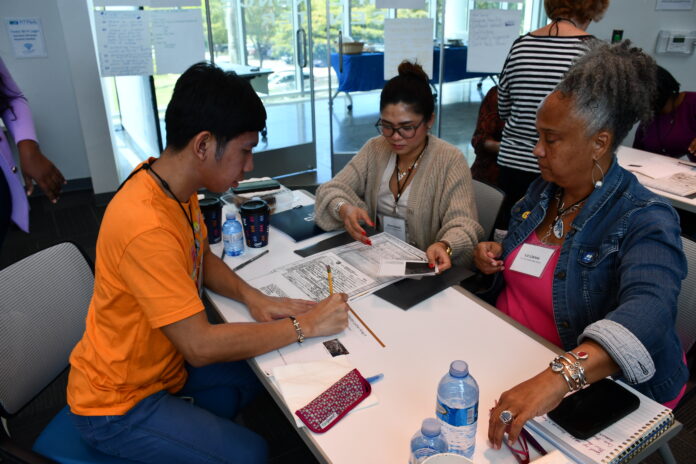
(Photo by Sophia Aubin, Caribbean Genealogy Library)
Educators were provided with classroom-ready materials, including lesson plans, case studies, teaching strategies, and research tools. They also received access to genealogy databases and local archival resources, expanding their ability to bring authentic, place-based learning into their classrooms.
A distinguishing feature of the program is its ongoing support. Teachers will continue working with facilitators through one-on-one virtual follow-ups, helping them develop personalized lesson plans and track student outcomes over time.
Organizers say this sustained engagement is key to long-term success, ensuring that the workshop translates into meaningful classroom impact rather than remaining a one-time experience.
Equally important was the collaborative effort behind the initiative. Local partners played a central role in shaping the workshop to reflect the unique history and cultural landscape of the Virgin Islands.
The Virgin Islands Education Department, through its Division of Virgin Islands Cultural Education, helped coordinate teacher recruitment and will continue supporting implementation in schools. Meanwhile, the Caribbean Genealogy Library provided critical access to region-specific historical materials and expertise.
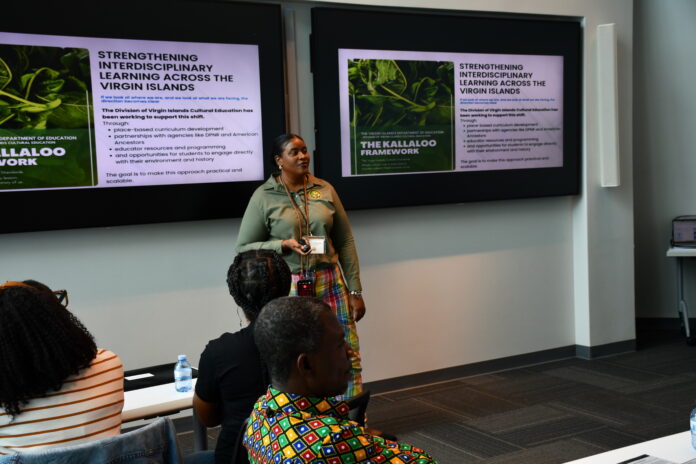
(Photo by Sophia Aubin, Caribbean Genealogy Library)
The Community Foundation of the Virgin Islands played a pivotal role in securing and managing grant funding, with representatives on site observing the workshop and supporting its continued growth.
That collaboration created what Axe described as a uniquely powerful experience, bringing together educators, historians, and community organizations in a shared mission.
“To see everyone come together from local partners to teachers across islands was incredibly meaningful,” he said. “It’s about building relationships, sharing knowledge, and creating something sustainable for the future.”
The workshop also addressed real challenges educators face when introducing genealogy in the classroom. Facilitators acknowledged that family history can be sensitive, particularly for students with limited access to information or complex family backgrounds. Teachers were given inclusive strategies to ensure all students can participate in meaningful ways.
Feedback from participants was overwhelmingly positive, with educators showing strong enthusiasm for incorporating genealogy into their teaching. Organizers noted that the Virgin Islands’ deep cultural roots and emphasis on heritage make it an especially receptive environment for this type of learning.
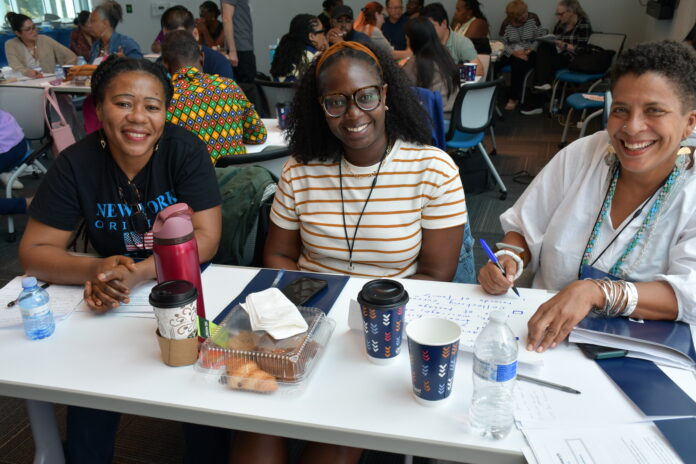
(Photo by Sophia Aubin, Caribbean Genealogy Library)
The initiative builds on the success of previous workshops in the territory, where teachers reported increased student engagement and more meaningful classroom discussions after introducing family history projects.
With another workshop already planned, organizers hope to continue expanding participation and building a network of educators committed to culturally relevant, inquiry-based teaching.
Beyond lesson plans and resources, the program’s broader goal is to empower teachers – building confidence, encouraging innovation, and helping students see themselves reflected in the broader story of history.
By Diana Dias